

Last Updated on August 21, 2024
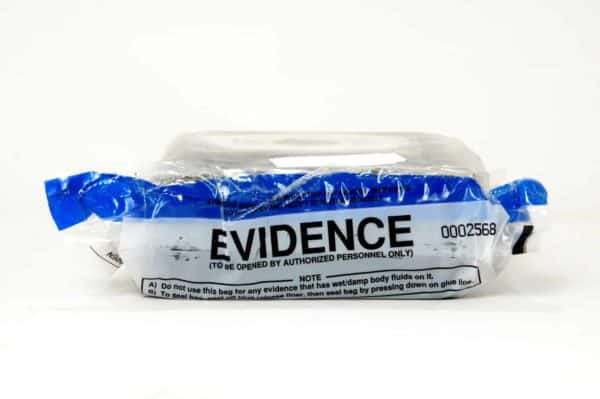
In order to be used in a trial against a suspect, physical evidence must be collected by police in a specific manner and also must follow a rigorous chain of command through the hands of police and professionals trained to properly handle such important items. Because this evidence can be the difference between a full acquittal and a guilty verdict, it is supposed to be carefully watched and handled by those in the police department and any other agencies tasked with its collection or analysis. But what happens when the very person assigned to collect, care for, or test evidence is actually planting it or tampering with it?
How Does California Define Planting or Tampering With Evidence?
Penal Code Section 141 (PC) makes it illegal to alter, modify, plant, place, manufacture, conceal or move evidence if they act with the intent of getting someone charged with a crime or to be used in a trial or other legal proceeding -including civil legal matters. This law doesn’t just apply to physical matter, but also images and video recordings both analog and digital.
While the description for the crime is pretty long, the most important part of proving planting or tampering with evidence charges is to show the suspect’s intent. In order to be found guilty, the prosecution must prove that someone acted willfully and intentionally, so if a person accidentally drops physical matter at a crime scene that ends up being used as false evidence, they didn’t violate the law because they were not acting with a specific intent of knowingly and willfully placing the matter that may have resulted in false accusations against someone else.
Additionally, the person must have known that they were planting or tampering with evidence, so even if they knowingly and willfully placed something somewhere because someone else told them to do so, if they did not know the material could result in a person being falsely accused, they still didn’t commit the crime of planting false evidence.
Finally, the person who planted or tampered with the evidence must have had the specific intent that the evidence would have resulted in either another person being charged with a crime, or that the material would wrongfully produced as genuine or true in a trial, proceeding or inquiry.
Penalties for Violating 141 (PC)
Ordinarily, 141 (PC) is a misdemeanor offense, but this only applies to civilians. If the person who is accused of planting or tampering with evidence was a police officer, then this type of action will result in felony charges.
As a misdemeanor, the crime is punishable by up to 6 months in jail and a fine of up to $1,000. But because a peace officer is given so much more power and trust regarding the handling of evidence and investigation of a crime scene, police officers face much more steep penalties and can even be sent away to a state prison for as long as 5 years if they have found guilty of this offense.
Anyone accused of planting or tampering with evidence, whether a civilian facing a potential jail sentence or a law enforcement official facing felony charges, should call a criminal defense attorney as soon as possible to fight the charges. A top lawyer may be able to minimize the sentence someone may face for this offense or help fight the charges altogether.
Real Life Examples of Evidence Tampering
While cases like this are rare, they do happen and the consequences can be far, far reaching. In one notable case, Massachusetts State Police chemist Annie Dookhan plead guilty to tampering with evidence after confessing that she that she cut corners on drug tests, improperly removed evidence from storage, forged signatures on documents and recorded tests as positive when they were actually negative. In addition, she lied about having a master’s in chemistry when applying for her job. Dookhan committed these acts for between two and three years and she was involved with over 40,000 criminal cases.
Eventually, the state dropped over 21,000 charges she was involved with and the state retried only 117 of the cases she may have tainted. Unfortunately, because most of those convicted with the tainted evidence were charged with misdemeanors or low-level felonies, 90% of the people who suffered due to Dookhan’s work already served their full sentences by the time she was caught.
It’s worth mentioning that retrials and dropped charges are not a guarantee in these situations. In a similar local case that took place in 2009, the city contracted a third-party contractor to run over 500 tests showed no sign of inconsistencies from the original reports, the issue was dropped. In the end, no prisoners were released in that case as it was determined the test results were accurate.
These scandals are an excellent reminder of why it always pays to have your lawyer retest and/or challenge a chemical sample if you disagree with the evidence presented by the prosecution. It is important to remember that while forensic science can help law enforcement better solve crimes, it is not infallible, particularly if those testing it or otherwise handling it may have tampered with the results.
If you have been accused of a crime, criminal defense attorney Peter M. Liss can help. Please call (760) 643-4050 to schedule a free consultation to discuss your case.


